

Explore
Mixed martial arts is not one national sport but many. Follow the scene country by country.
Mixed martial arts has no single birthplace and no single school. It was assembled in more than one place at once, out of whatever combat sports were already strong locally, and that is why a fighter's nationality still tells you something about how they fight. A scene built on folk wrestling produces different careers from one built on kickboxing, decades later and several generations of fighters down the line.
The pattern repeats everywhere. A country has a deep amateur base in one discipline, that base feeds the sport, and the resulting style carries the accent of its origin. Wrestling cultures produce fighters who decide where the fight happens and can hold it there. Judo and sambo cultures produce grip fighters, throwers and leg lockers. Striking cultures — boxing in some places, muay thai or kickboxing in others — produce fighters comfortable at range, who are usually tested first on the ground.
Jiu-jitsu is the discipline that travelled furthest. It was exported deliberately, academy by academy, and it has become the common language of ground fighting almost everywhere. That is why the distance between national styles has narrowed over the years without ever closing: the base is shared now, the accent is not.
A country page says where fighters come from, not where they prepare. Careers move. Fighters relocate for training partners at their own weight, for proximity to a promotion, or simply because the room that suits them is somewhere else. It happens most in the lighter divisions, which run deep in some places and thin almost everywhere else.
Reading the gym column alongside the nationality therefore separates two very different careers: one built inside a domestic system, one built abroad by a fighter who left it. Their records tend to look different, and so do their styles.
Each country page lists the fighters recorded from that country, with their professional records, weight classes and the gyms they train out of, and links through to each full profile. Records shown are professional records across all promotions, not a single organisation's tally.
By continent
Every country in the sport, continent by continent. Open one for its fighters, its gyms and its latest fights.
Bigger circle, more fighters
Get the app
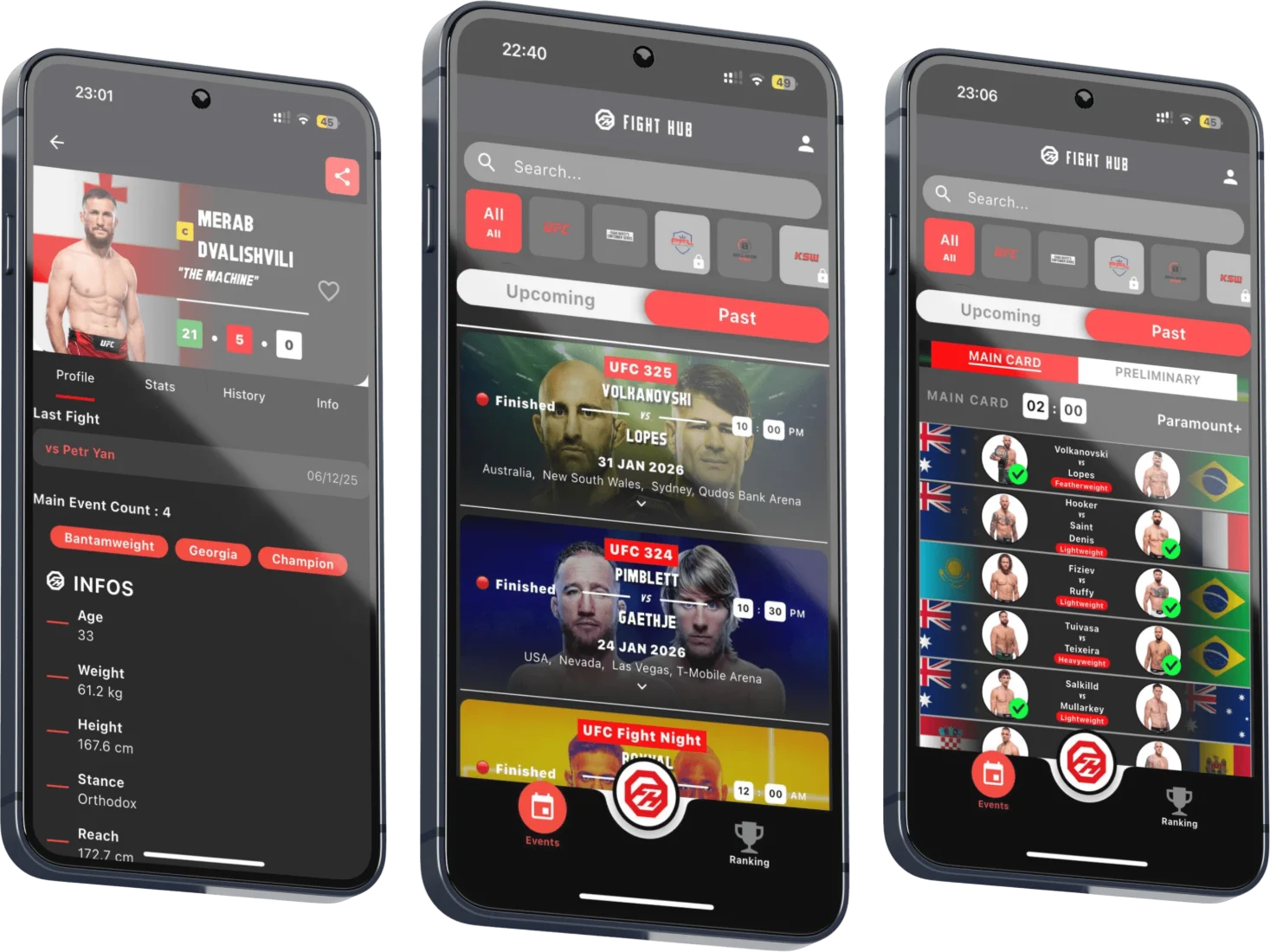
Full fight history, live rankings, upcoming cards and head-to-head comparisons. Free on iOS and Android.